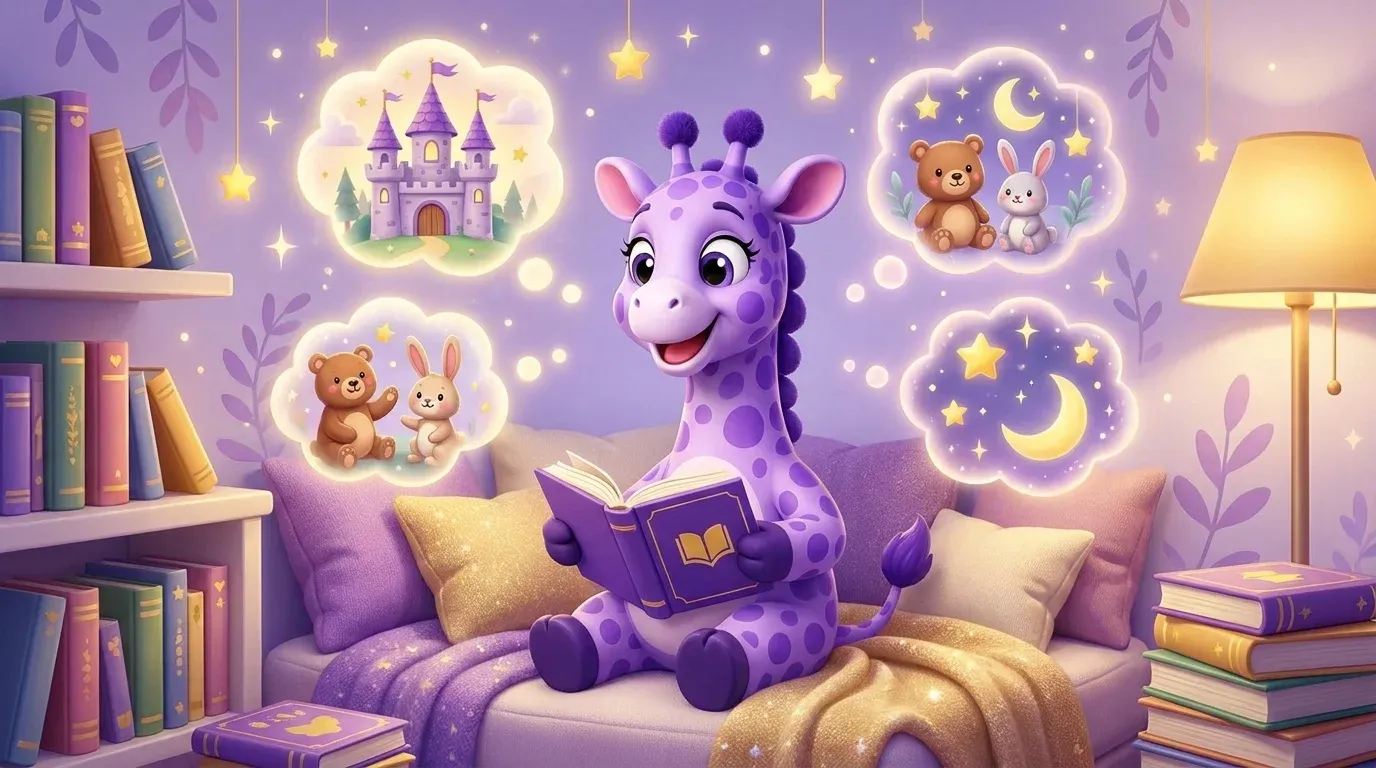
Ask an adult about a book from their childhood and watch their face change. They will not recite the plot. They will tell you how it made them feel, where they were when they read it, and who read it to them. That is the quiet power of storytelling. The stories we give children do not just pass an evening. They help build the people those children become.
Children's literature is often treated as the simple end of publishing. It is anything but. A picture book read a hundred times is shaping language, emotion and imagination in ways that last a lifetime. Here is how children's books actually shape young minds, and how to choose stories that both educate and entertain.
Why stories matter more than we think
A young child's brain is busier than at almost any other point in life, wiring itself through everything it experiences. Stories are a remarkably rich experience to feed it. In a single picture book a child meets new words, follows cause and effect, reads emotion on a character's face, and practises holding a sequence of events in their head. They are learning how the world works, dressed up as fun.
The shared part matters too. A story read aloud is also closeness, attention and the sound of a familiar voice, all of which tell a child they are safe. Organisations such as Reach Out and Read have built their work around a simple, well-evidenced idea: reading with young children early and often is one of the most powerful things we can do for their development.
The cognitive benefits of reading stories
The thinking-skills payoff of regular story time is large and well documented. Children who are read to tend to arrive at school with stronger language and a head start that compounds for years.
Language and vocabulary
Books use richer, more varied words than everyday chat. A story might offer "enormous," "shivered" or "delighted" where conversation would settle for "big," "cold" or "happy." Hearing those words in a clear context is how children quietly build a vocabulary far beyond their daily speech.
Attention, memory and knowledge
Following a story from beginning to end stretches a child's attention span and their ability to remember a sequence. Non-fiction and richly drawn worlds also feed raw knowledge, from how a seed becomes a tree to how people live on the other side of the planet. Each book leaves a child knowing a little more than before.
The emotional benefits of stories
If the cognitive case is well known, the emotional one may matter just as much. Stories are where children first practise being human.
- Empathy. Following a character's feelings from the inside teaches a child to recognise and care about emotions that are not their own.
- Resilience. Heroes who are scared and carry on anyway show children that fear is normal and can be faced.
- Naming feelings. A book gives words to big emotions, so a child can say "I feel left out, like the character did" instead of simply melting down.
- Comfort and safety. A familiar story revisited is a small, reliable world a child controls, which is deeply reassuring.
What children gain at each age
The same power shows up differently as a child grows. Matching the kind of book to the stage helps a story do its best work.
| Stage | Best fit | What the story is building |
|---|---|---|
| Baby (0 to 2) | Sturdy board books, rhymes | Sound, rhythm, bonding and first words |
| Toddler (2 to 4) | Picture books with simple plots | Vocabulary, sequencing and naming feelings |
| Early years (4 to 7) | Richer picture books, early readers | Empathy, imagination and reading confidence |
| Young reader (7 and up) | Chapter books | Stamina, complex emotions and independence |
How to choose themes that educate and entertain
The best children's books teach without ever sounding like a lesson. The trick is in the theme. A theme is not a moral stapled to the end. It is the feeling the whole story is quietly about, and children absorb it through what happens rather than through being told.
Strong themes tend to be the ones that match a child's real world: friendship and falling out, being brave when you are small, belonging, curiosity, kindness, the safety of home. Choose a theme a child can feel, let the characters live it out, and the story will both delight and teach at once. The moment a book stops to explain its own lesson is usually the moment a child stops listening.
The role of authors and illustrators in shaping young minds
None of this happens by accident. Behind every book that shapes a child is an author who chose honesty over preaching, and an illustrator who gave the feelings a face. Authors decide which worlds children get to visit and which lives they get to understand. Illustrators decide who children see reflected back at them, and whether the emotion on the page rings true.
That is a real responsibility, and a real opportunity. A thoughtful author and a skilled illustrator working together can widen a young reader's world, and our look at why every story deserves a custom illustration digs into how much the art carries. If you have a story you believe a child needs, our editors and book coaches help you tell it as well as it can be told.
A word from our senior editor
We asked Maya Holloway, who has spent fifteen years editing books for young readers, what she keeps in mind with every manuscript.
Children are far cleverer readers than people assume. They do not need to be talked down to, and they can always tell when they are. The stories that shape them are the ones that treat them as capable of real feeling. Respect the reader, and the lesson takes care of itself.
Maya Holloway, Senior Editor, Purple Giraffe Press
Stories that stay for life
The picture book on a toddler's shelf is doing serious, lasting work: building language, growing empathy, and laying down the warm memory of being read to that a person carries for the rest of their life. That is why quality matters, in the words, in the art, and in the care taken over both. If you are dreaming of writing a story that shapes a young mind for the better, that is exactly the kind of book we love to help bring into the world. You can see where it begins in our guide to publishing your first children's book.
Ready when you are
Let's bring your children's book to life.
From a first idea to a finished book children adore, we are with you at every step. Tell us about your story and we'll reply within one business day.
Start Publishing →